Exploring Glazing Techniques

Date :
May 28, 2025
Category :
Techniques
Reading time
4 minutes
Summary
Glazing is one of the most transformative stages in the ceramic-making process. More than just a decorative layer, glaze defines the surface, texture, and personality of a piece. In this blog, we explore popular glazing techniques, their artistic possibilities, and how they enhance the beauty and functionality of ceramic art.
What is Glazing?
Glazing involves applying a liquid mixture of minerals and glass-forming materials to a bisque-fired ceramic piece. When fired again in the kiln, the glaze melts and forms a glassy surface, which can be glossy, matte, crackled, or textured—depending on the technique and materials used.
Glazes serve both functional and aesthetic purposes. They make ceramics waterproof, food-safe, and durable, while also adding vibrant colors, intricate patterns, and unique finishes. The right glaze can completely transform a piece, highlighting details and bringing the artist's vision to life.
Common Glazing Techniques
Glazing allows artists to experiment with endless combinations—mixing matte and glossy finishes, layering multiple colors, or using reactive glazes that produce unpredictable, stunning results. Crystalline and raku glazes, for instance, create textures that are impossible to duplicate, making every piece unique.
The ceramic piece is dipped into a glaze bucket for even, all-over coverage.
It’s quick and consistent, ideal for production pottery.
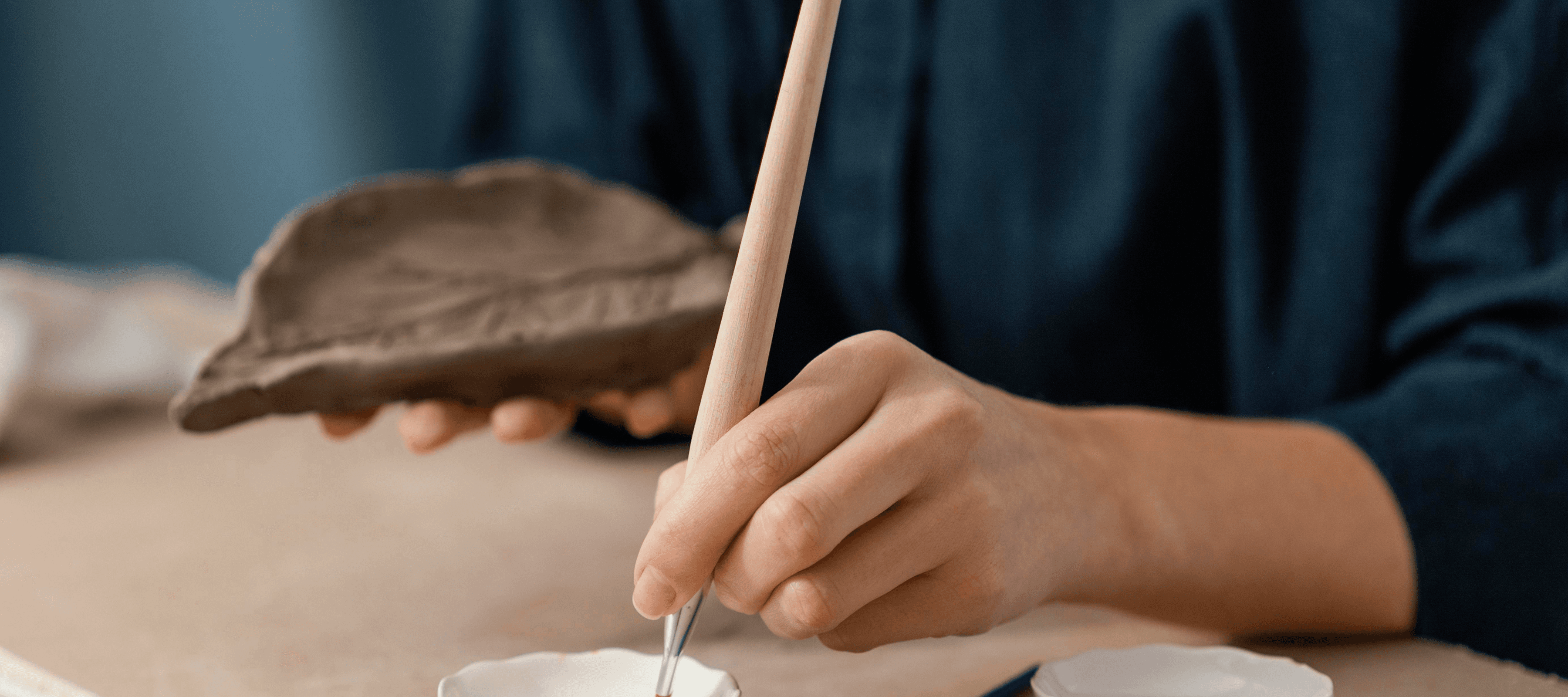
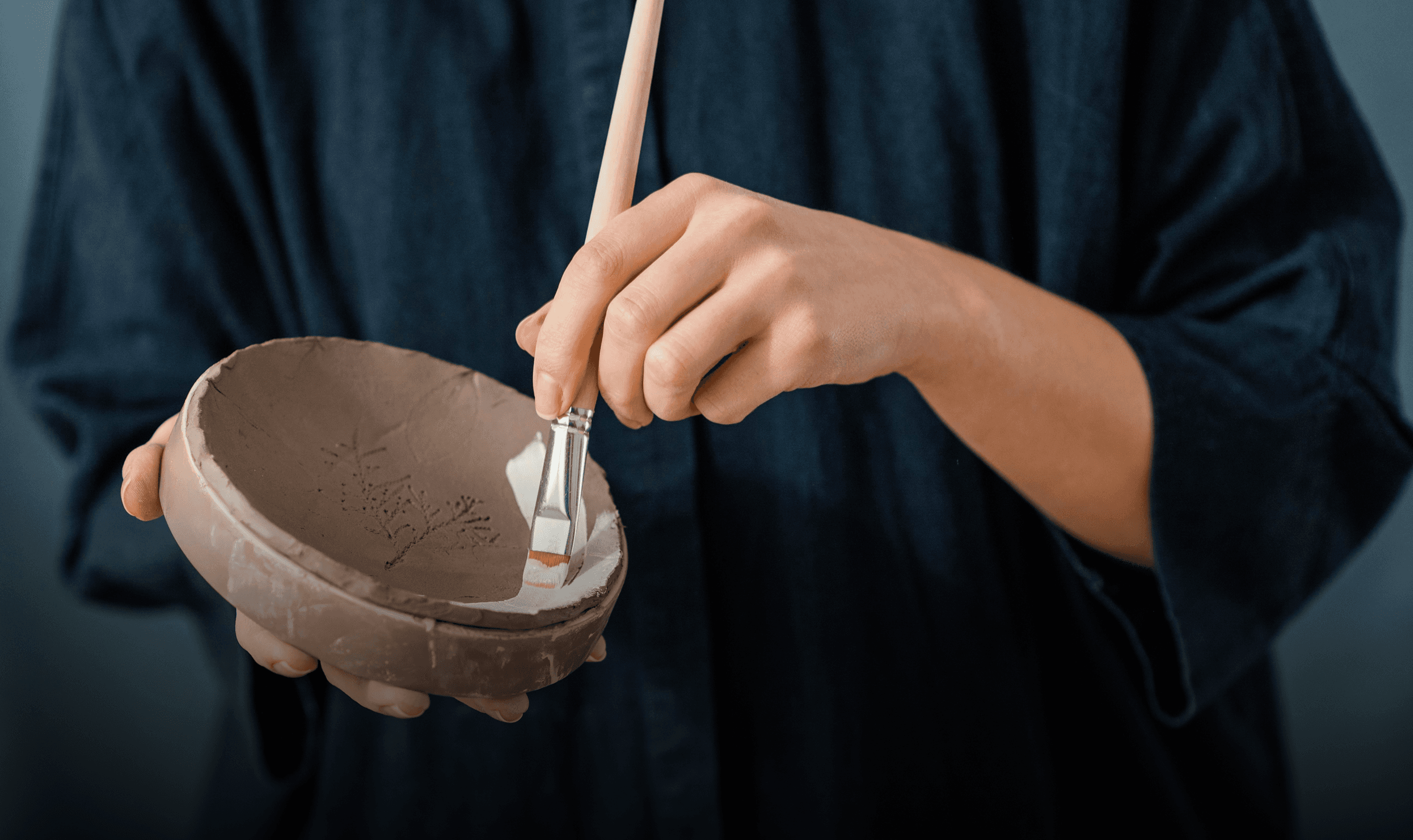
Artists use brushes to apply glaze, allowing for layered effects, painted designs, and artistic control over patterns and
textures.
Glaze is poured over the piece, creating organic, flowing patterns. Great for bold surfaces and visual movement.
Using a spray gun or airbrush, this technique creates smooth, even coats and gradient effects.
It's ideal for larger or more delicate pieces.
Wax is applied to areas that should remain unglazed.
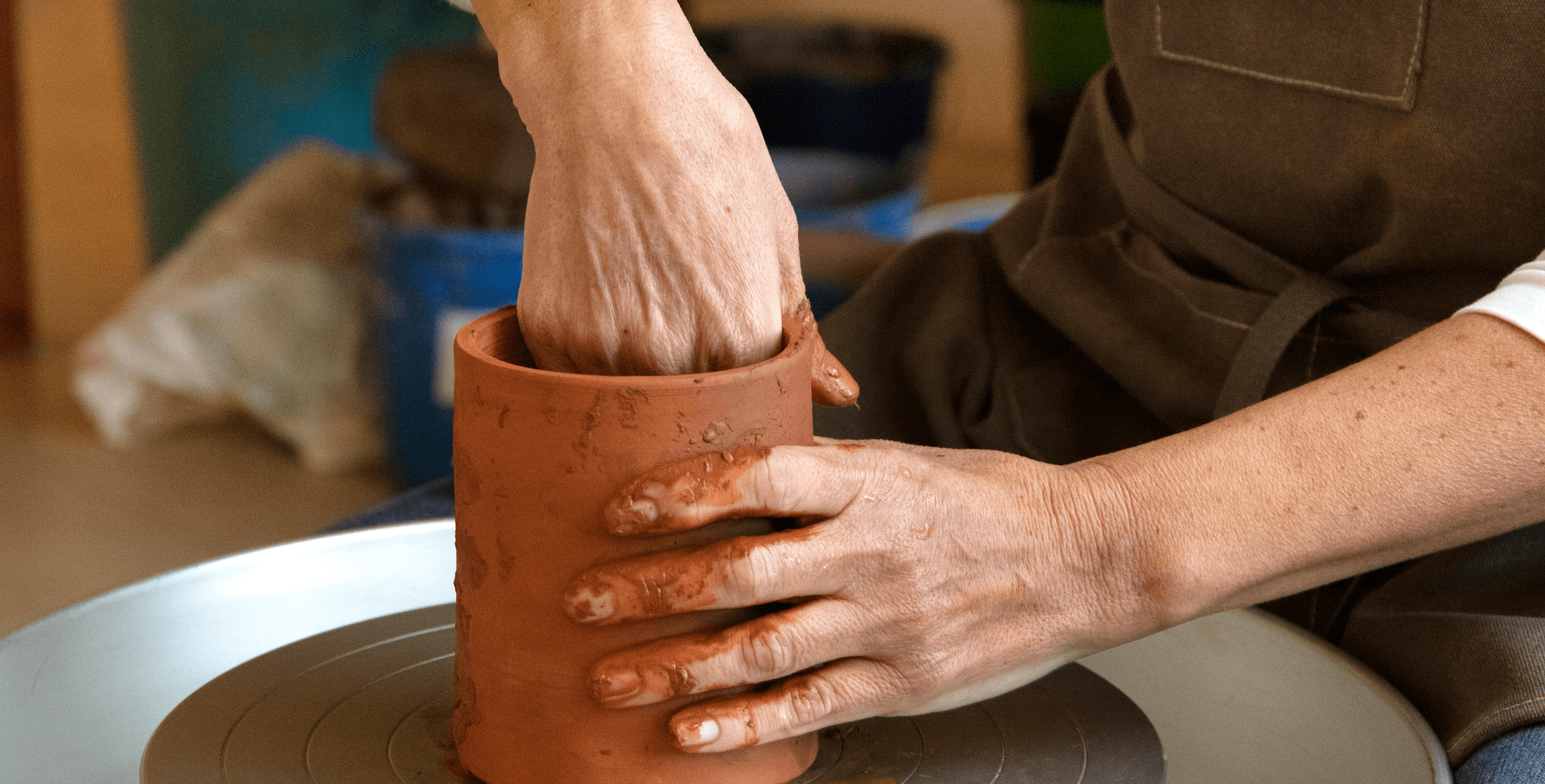
When dipped or painted over, the wax prevents glaze adherence, creating beautiful contrast and patterns.Once shaped,
the piece must dry slowly to avoid cracks. After drying, it's fired in a kiln — the first firing (bisque firing) strengthens the
clay. Then, glazing begins. Glazes are applied like paint, and artists experiment with color combinations and finishes like
matte, gloss, or crackle.
After glazing, the piece undergoes a second firing. This stage is both technical and magical. The heat transforms powdered minerals into vibrant, glass-like surfaces. Artists often wait with excitement and curiosity—because with glaze, the kiln always adds a final surprise.
Glazing is where science meets creativity in ceramics. It adds depth, color, and character to every piece, turning simple forms into expressive works of art. Whether through bold pours or delicate brushstrokes, glazing techniques give artists endless ways to explore and define their unique style.
Impact on user experience
Beautiful ceramics enhance user experience by combining functionality with aesthetic appeal. Their handcrafted quality offers a tactile, emotional connection, making everyday moments—like dining or decorating—more meaningful. Unique textures, shapes, and finishes create a sensory-rich experience that fosters appreciation for artistry, elevating ordinary routines into visually and emotionally satisfying interactions.